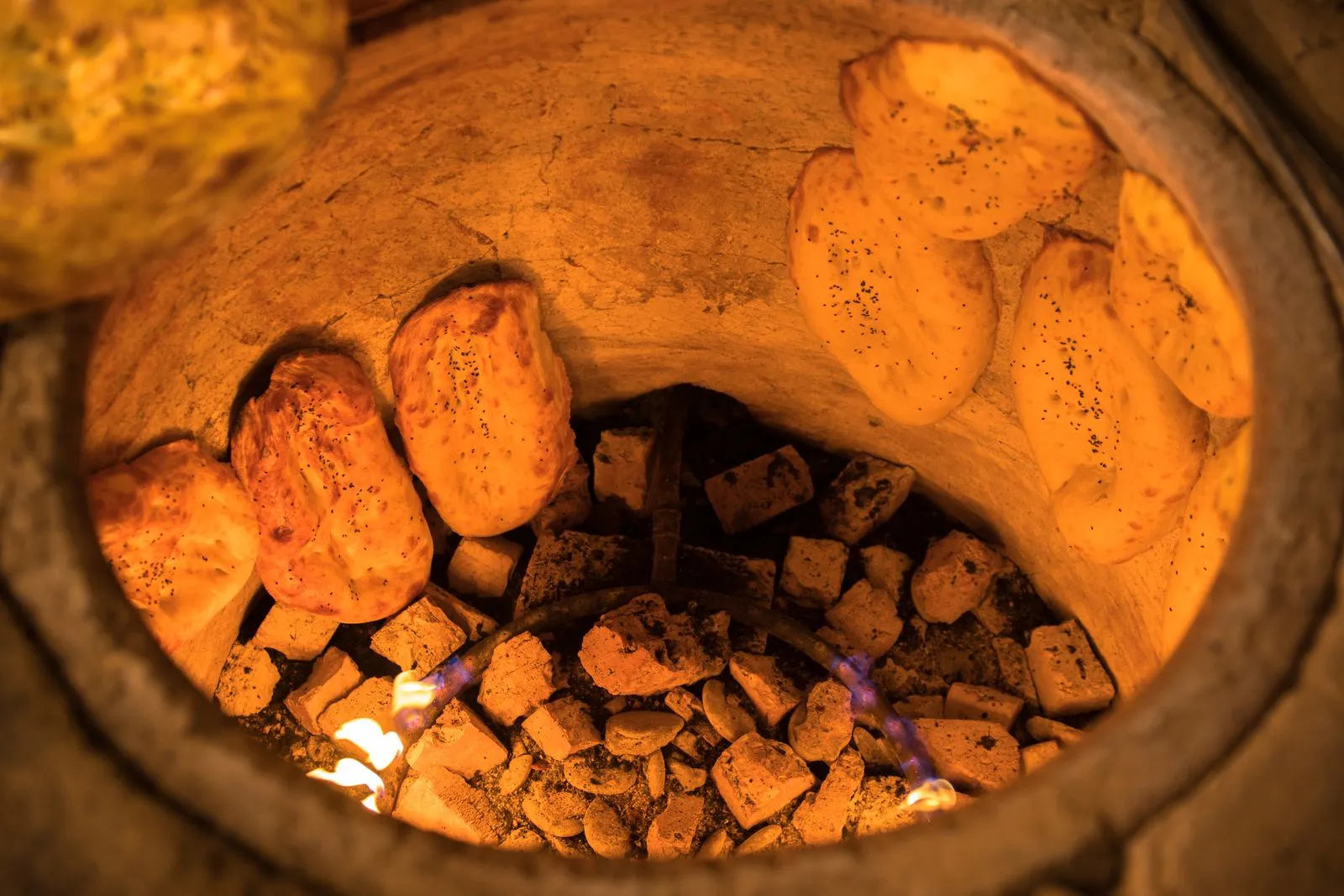
Tandoori cooking gets its name from the tandoor, a clay oven traditionally heated by a fire inside. Its intense heat cooks food quickly, while the oven’s walls radiate heat around each piece. That combination gives naan its blistered surface, helps chicken develop a browned exterior, and brings a lightly charred edge to vegetables. The oven does more than cook: it creates a distinctive texture and flavor that are difficult to reproduce with an ordinary pan.
How a Clay Tandoor Works
A tandoor is a deep, cylindrical oven with thick clay walls. A fire heats the interior, and the clay absorbs and radiates that heat back toward the food. Because the oven is very hot, many dishes cook quickly. The enclosed space also holds heat around the food rather than exposing just one side to a cooking surface.
Cooks place skewered items inside the oven, often lowering them into the heat, while dough can be pressed directly onto the inner wall. Each method uses the oven’s heat differently. The clay surface helps bake flatbread, and the open central space lets skewers cook from multiple directions.
Why Naan Gets Its Texture
Naan dough sticks to the hot clay wall and begins baking at once. The surface cooks rapidly, forming bubbles and browned spots while the inside stays soft and tender. That contrast between a lightly crisp exterior and a pillowy center is a signature of tandoor-baked naan.
The bread cooks in a short time, so timing matters. A cook watches for puffing and browning, then lifts the naan from the wall before it becomes dry or overly dark. A home oven can bake naan, but it may not create the same combination of direct wall contact and intense radiant heat.
How Tandoors Cook Chicken
Chicken is commonly marinated before it goes into the tandoor. The marinade seasons the meat and can include yogurt, spices, and other ingredients that help coat its surface. The chicken is placed on skewers so heat can reach it from around the meat, encouraging even cooking and a browned exterior.
The oven’s heat can create charred edges while keeping the inside juicy when the cook monitors the time and temperature. Marinade and cooking method both affect the final result; the tandoor itself does not guarantee tenderness. Properly cooked chicken should be fully done inside, with the characteristic roasted flavor on the outside.
What Happens to Vegetables
Vegetables also benefit from quick cooking in intense heat. On skewers or in a suitable cooking vessel, they can soften while developing browned or lightly charred patches. The high heat concentrates their natural flavor at the surface without requiring a long cook that can leave them limp.
The result depends on the vegetable’s size, moisture, and placement in the oven. Firm pieces may need more time than tender ones, so cooks often group ingredients with similar cooking needs. A light coating of seasoning or marinade adds flavor, while leaving enough space between pieces helps heat circulate.
A clay tandoor combines radiant heat, quick cooking, and direct contact with hot surfaces to give breads, meats, and vegetables their distinctive textures and roasted flavor. At Tandoor & Thyme in Austin, you can explore these traditional cooking methods across a range of dishes. Stop by or contact the restaurant to ask what’s on the menu.